



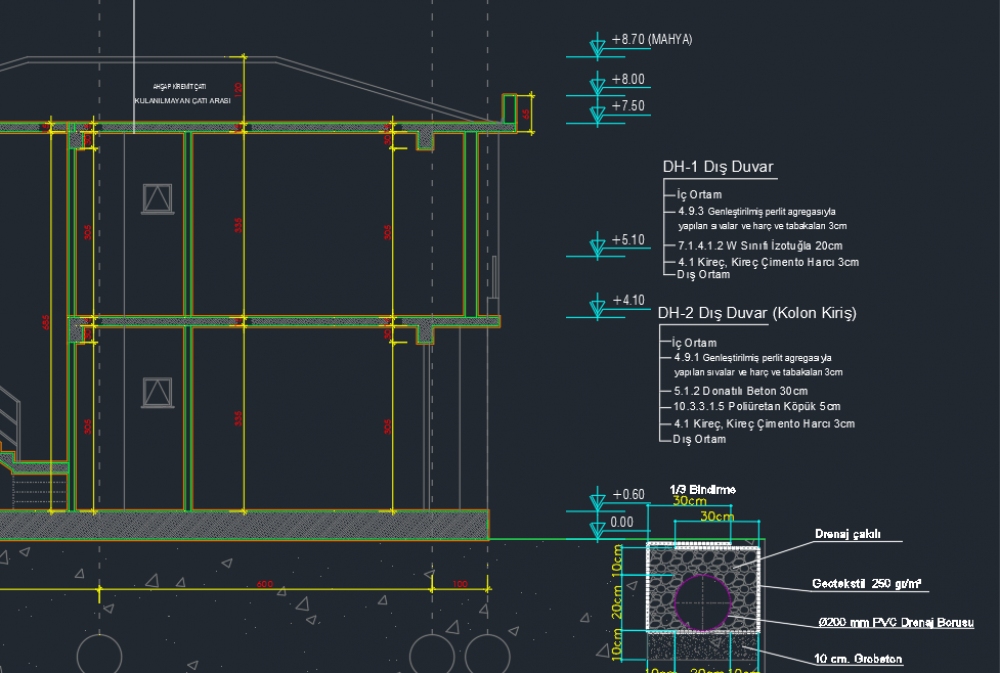
An architectural project is the collection of drawings, documentation, and analyses prepared to ensure that a building is constructed in accordance with functional, aesthetic, and technical requirements. This project is not limited to the form of the structure; it is a multidisciplinary process that comprehensively addresses all aspects of the building, including ground conditions, climate, user needs, and compliance with legal regulations.
Importance of Architectural Projects
An architectural project enables the modeling of a structure in full detail—either digitally or physically—before construction begins, thereby minimizing potential risks during the construction process. It also fulfills the following functions:
-
Ensures technical accuracy: Facilitates coordination with engineering disciplines such as structural, mechanical, and electrical systems.
-
Provides aesthetic coherence: Preserves architectural language and ensures harmony with the surrounding environment.
-
Regulates legal approval processes: Includes the drawings and documents required for obtaining construction permits.
-
Contributes to cost and time management: A well-prepared project simplifies labor and material planning.
Requirements of an Architectural Project
For an architectural project to be viable, sustainable, and legally compliant, it must meet the following criteria:
-
Functional design: Should provide efficient, accessible solutions that meet user needs.
-
Structural compatibility: Must align with geotechnical surveys and structural engineering calculations.
-
Legal compliance: Adherence to zoning plans, construction codes, and regional regulations is essential.
-
Level of detail: Must include detailed drawings that guide the implementation and manufacturing processes.
-
Sustainability and environmental sensitivity: Should incorporate sustainable design principles such as energy efficiency, natural lighting, and water management.
Stages of an Architectural Project
Architectural projects are generally developed in the following stages:
-
Concept Design (Preliminary Design): The stage where initial ideas are shaped, user requirements are analyzed, and a general design approach is formed.
-
Schematic Design: A draft stage where the general plan scheme, building mass, and functional layout are developed to a level suitable for approval.
-
Permit (Approval) Project: The set of drawings submitted to local authorities to obtain official construction permits, with full compliance with current regulations.
-
Construction (Implementation) Project: The detailed set of drawings used on the construction site, serving as the main reference for the building process.
-
Detail Drawings: Specialized drawings that provide precise detailing for staircases, façade systems, wet areas, kitchens, etc.
-
As-Built Project: The final revised project based on the completed construction, often required for occupancy permits.
LATEST NEWS
-
 March 28, 2026
What is a Raft (Radye) Foundation?
-
 December 21, 2025
Why Is Concrete Quality Critically Important?
-
 November 29, 2025
ow to Identify an Earthquake-Resistant Home? Simple Checklist