




What is a Raft (Radye) Foundation?
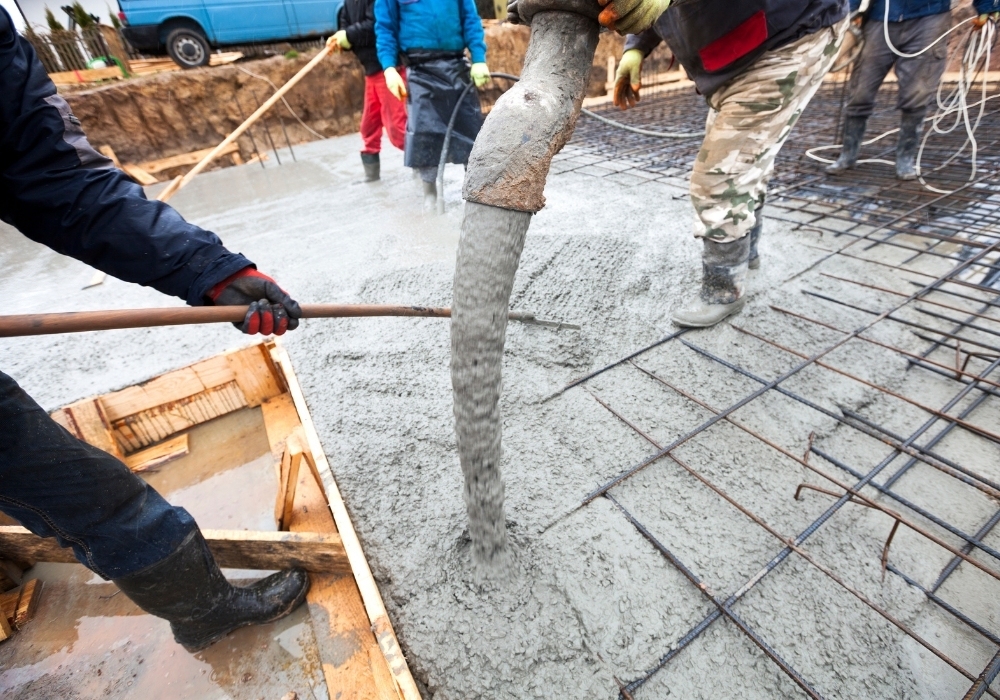
A raft foundation, also known as a radye foundation, is a structural system where building loads are transferred to the ground through a single reinforced concrete slab. In this system, loads from columns and walls are distributed over a large area to the soil.
Raft foundations are especially preferred in areas with low soil bearing capacity, making them one of the most effective solutions for building safety.
Why is a Raft Foundation Important?
In countries like Turkey, which are prone to earthquakes, the safety of a building depends not only on the superstructure but also on the foundation system.
With a raft foundation:
- Loads are evenly distributed to the ground
- Differential settlement is minimized
- Overall structural stability improve
When is a Raft Foundation Used?
Raft foundations are typically chosen in the following cases:
- Weak or loose soils
- High groundwater levels
- Heavy-load structures (multi-story buildings)
- Areas with high seismic risk
Engineers decide on the necessity of a raft foundation based on geotechnical survey results.
Advantages of a Raft Foundation
The key benefits include:
✅ Even Load Distribution
Loads from the building are spread over a wide area, preventing excessive stress on the soil.
✅ Reduced Differential Settlement
Minimizes cracks and structural deformation caused by uneven settlement.
✅ Better Earthquake Performance
Acts as a single structural unit, improving seismic behavior.
✅ Reliable in Weak Soils
Effective where other foundation types may fail.
Disadvantages of a Raft Foundation
- Higher cost compared to other foundation types
- Requires more concrete and reinforcement
- Longer construction time
However, these disadvantages are often outweighed by the enhanced safety provided.
Raft Foundation vs. Other Foundation Types
| Foundation Type | Application Area | Advantage |
|---|---|---|
| Raft Foundation | Weak soils | Safe and balanced |
| Strip (Continuous) | Moderately firm soils | More economical |
| Isolated Footing | Strong soils | Fast and low-cost |
Raft foundations stand out as the most reliable option for risky soil conditions.
Conclusion
If the soil is not strong enough or the site is in a high-seismic zone, a raft foundation is the safest and most reliable choice.
However, every project requires a custom engineering assessment and geotechnical survey to determine the most suitable foundation type.
Professional Support
For optimal foundation selection, cost efficiency, and safe construction, consulting with experts is critical.
Contact us for project-specific engineering solutions.
EFİL CONSTRUCTION
LATEST NEWS
-
 May 23, 2026
Soil Investigation
-
 April 30, 2026
What Is a Bored Pile?
-
 December 21, 2025
Why Is Concrete Quality Critically Important?