



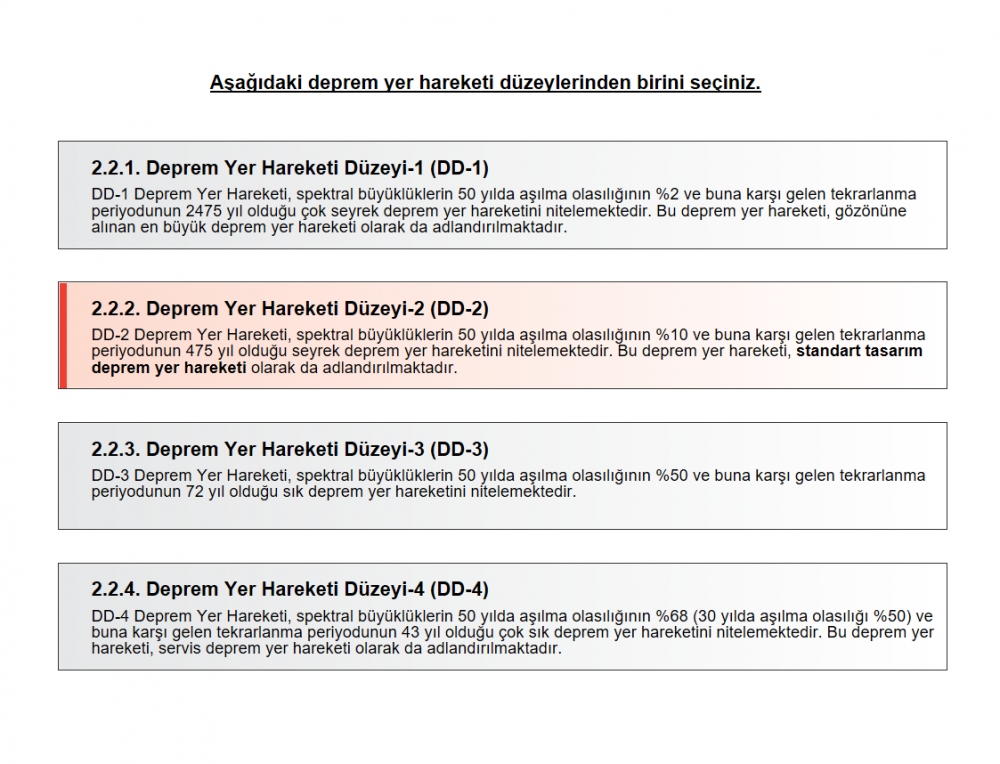
What Is TBDY 2018? | Structural Design Drawing in Antalya and Earthquake-Resistant Construction
Introduction: TBDY 2018 – The Fundamental Guide for Earthquake-Resistant Structures in Turkey
Turkey is located on one of the most active seismic belts in the world. Every year, thousands of small and large earthquakes emphasize the importance of building earthquake-resistant structures. In this context, the TBDY 2018 (Turkish Building Earthquake Code) stands out as the most comprehensive and up-to-date reference for ensuring structural safety. Especially in high-density construction areas like Antalya, creating a TBDY-compliant structural design project is not only mandatory but crucial.
In this comprehensive article, we will explore:
-
What is TBDY 2018 and why is it essential?
-
What is a structural (static) design and how is it prepared in Antalya?
-
What are the technical requirements of the 2018 earthquake code?
-
How should local soil and seismic conditions in Antalya be evaluated?
-
Which structural systems should be selected and under what conditions?
1. What Is TBDY 2018?
TBDY 2018 stands for the “Turkish Building Earthquake Code”, which was revised in 2018 and came into force on January 1, 2019. It was prepared by AFAD (Disaster and Emergency Management Authority) and provides mandatory guidelines for designing buildings resistant to seismic effects.
It applies not only to new constructions but also to existing buildings undergoing retrofitting, change of function, or renovation.
2. What Are the Innovations Introduced by TBDY 2018?
Compared to the previous version (TBDY 2007), the 2018 code introduces critical innovations, both in analysis methods and performance goals:
-
New Seismic Hazard Map: Developed with more accurate data and made publicly available via AFAD's web platform.
-
Performance-Based Design: Structures are designed based on their function and possible earthquake scenarios, not just the structural system.
-
Building Usage Category (BKS): Hospitals, schools, residences, and commercial buildings are assessed under different safety classes.
-
Detailed Soil Behavior Requirements: More comprehensive and mandatory geotechnical investigations.
-
Nonlinear Seismic Analysis: Required for tall and critical public buildings.
3. What Is a Structural Design Project and Why Is It So Important?
A structural design project includes all calculations, reinforcement details, and load assumptions needed for the safe construction of a building’s load-bearing system.
In a high-risk seismic zone like Antalya, structural design:
-
Ensures earthquake safety,
-
Is a required component during building inspection and approval,
-
Is essential for acquiring a construction permit,
-
Increases the building’s lifespan and resilience.
4. Structural Design Process in Antalya
a) Soil Investigation & Analysis
Antalya has diverse soil conditions:
-
Coastal areas like Lara and Konyaaltı feature soft and sandy soils,
-
Inland districts like Kepez and Döşemealtı have rocky or stiff soils.
Hence, a comprehensive geotechnical report must be prepared before any project begins.
b) Architectural Coordination
The structural design must perfectly align with the architectural plan. Otherwise, the project may be rejected by municipalities or inspection offices.
c) Compliance with TBDY 2018
Key steps include:
-
Determining SDS and SD1 seismic coefficients,
-
Assigning the proper BKS and DTS class,
-
Calculating seismic loads accurately,
-
Verifying lateral displacements and ductility requirements,
-
Ensuring all structural members and reinforcement are code-compliant.
5. Seismic Risk Parameters: Antalya’s Specific Seismic Conditions
TBDY 2018 requires seismic design to be tailored to the exact coordinates of the project site. For Antalya:
-
SDS (Design Spectral Acceleration): Typically between 0.26 and 0.35
-
Soil Classes: ZA, ZB (rock); ZC, ZD (medium to soft soils)
-
Seismic Design Category (DTS): Often DTS-2 or DTS-3 for residential areas
These values can be accessed from AFAD’s Seismic Hazard Map.
6. Performance Levels Under TBDY 2018
Structures must meet different performance criteria based on the expected earthquake magnitude. The code defines:
-
Collapse Prevention (CP): The structure must not collapse under maximum considered earthquake.
-
Life Safety (LS): No casualties under moderate seismic events.
-
Immediate Occupancy (IO): Remain functional after minor tremors.
-
Limited Damage (LD): Easily repairable damage without structural failure.
7. Retrofitting of Existing Structures Under TBDY 2018
The 2018 code also applies to buildings constructed before its enforcement.
When Is Retrofitting Needed?
-
Buildings constructed before 1999,
-
Those that fail performance evaluations,
-
Functional changes (e.g., from residential to educational use),
-
Buildings on liquefiable soils.
Retrofitting Methods
-
Fiber-reinforced polymer (FRP) wrapping,
-
Jacketing and section enlargement,
-
Steel bracing systems,
-
Foundation strengthening and soil stabilization.
8. TBDY-Compliant Building Permit Process in Antalya
Required Documents:
-
Architectural drawings
-
Structural (static) and reinforcement plans
-
Geotechnical report
-
Electrical and mechanical designs
-
Survey and land documentation
-
Engineer and architect signatures (digital or physical)
Permit Workflow:
-
Project preparation and internal checks
-
Municipality review and approval
-
Submission to a licensed building inspection firm
-
Final building permit issuance
9. Common Mistakes in Structural Design Projects
-
Mismatched structural and architectural plans
-
Ignoring geotechnical findings
-
Failing to meet performance-based design requirements
-
Inaccurate modeling of seismic loads
-
Reinforcement details not in line with national standards
Municipalities in Antalya conduct detailed reviews. Professional planning ensures smoother approvals and safer buildings.
10. Selecting the Right Structural System Based on TBDY 2018
The Turkish earthquake code mandates choosing the most suitable structural system based on site conditions, soil type, and building height.
a) Types of Structural Systems
| System Type | Description |
|---|---|
| Moment Frames | Ideal for low-rise buildings; limited lateral stiffness. |
| Shear Wall Systems | Best for mid-to-high-rise buildings; resists seismic forces efficiently. |
| Dual Systems (Frame + Shear Wall) | Combines strength and flexibility for maximum earthquake resistance. |
| Steel Structures | Suitable for industrial and large-span buildings. |
b) System Selection by Building Height
| Number of Stories | Recommended System | Code Requirement |
|---|---|---|
| 1–3 | Frame or Dual | DTS-3 or DTS-4 |
| 4–7 | Shear Wall or Dual | DTS-2 |
| 8+ | Dual with walls | DTS-1 (high risk) |
c) Structural Systems Suitable for Antalya
Given the prevalence of soft or liquefiable soils, structures in Antalya should favor:
-
Shear walls or dual systems,
-
Soil improvement where necessary,
-
Nonlinear time-history analysis for tall or critical structures.
11. Conclusion: Earthquake Safety Starts with TBDY 2018-Compliant Design
In Antalya and all of Turkey’s seismic zones, creating a TBDY 2018-compliant structural design project is not only a legal requirement, but also the cornerstone of human safety and urban resilience. Professional planning, soil-specific evaluation, and correct system selection can save lives and protect investments.
If you're planning a new construction or renovating an existing building in Antalya, partner with certified engineers and architects who are experienced in TBDY 2018 compliance.
LATEST NEWS
-
 May 23, 2026
Soil Investigation
-
 April 30, 2026
What Is a Bored Pile?
-
 March 28, 2026
What is a Raft (Radye) Foundation?